"A Global Firewall Against The Far Right"
Mar 27, 2026
This article, first published in Options following a conference held by the CGT, lays out how our unions are responding to attacks on public services by the far right around the world.
Republished from Options, Author: Valérie Géraud
The far right has come to power or is participating in coalitions in several countries, and its ideas are influencing public policy. Everywhere, the weakening of public services creates fertile ground for frustration and anger to take root, which in turn reinforces isolationism, xenophobia, discrimination, and the appeal of the far right: a vicious cycle.
“We hope this moment will be a milestone. Raising awareness of the dangers threatening us is, in itself, already an act. ” With these words, Françoise Geng, an activist with the CGT Federation of Health and Social Action and president of the European Federation of Public Service Unions, highlights the importance of the symposium “The Far Right: A Major Threat to Public Services, Their Missions, and Their Staff,” held on March 11 during her federation’s National Committee meeting.
Joint attacks on public services and trade unionism
In France, the National Rally has gained further ground in the municipal elections , heightening concerns about the 2027 elections, and will assume decision-making positions in a growing number of town halls and local authorities. “ We feel powerless in the face of this crisis, but it is still possible to put up barriers by standing together to devise and organize responses. Even if the statutes or scope of public services are not always comparable, it is in this spirit that we want to exchange ideas with our colleagues around the world, to identify the attacks they are facing and the forms of resistance they have implemented.”
Among the speakers was Federico Bottanza, General Secretary of CGIL-Public Service (Italy): “The CGIL is a target for Georgia Meloni’s supporters simply because it is a trade union organization. One of our historic headquarters in Rome was attacked in October 2021, without her government condemning this assault. The government is attacking our legitimacy as representatives of workers, as well as trade union rights—except when it comes to imposing non-representative organizations aligned with it. Whether through security decrees or emergency laws, the right to strike, demonstrate, or assemble can now be restricted. This makes it easier for the government to undermine social rights despite its campaign promises—wages are lagging behind runaway inflation, the retirement age remains fixed at 67—or to cut public service budgets by accelerating privatization, which further undermines solidarity and harms the most disadvantaged. ”
In Spain, certain autonomous provinces are receptive to the demagogic and nationalist rhetoric of the Vox party, which denigrates unions and the inefficiency of public services: “ Under the guise of demanding better wages or access to housing—but primarily for nationals—Vox advocates for the most unbridled ultraliberalism and attacks collective bargaining agreements. “As the social climate deteriorates, we sometimes lack the resources to fight back,” says Yolanda Gil Alonso (Comisiones Obreras). Union leaders in the Netherlands and Finland, for their part, lament that, against a backdrop of rising nationalism and racism, their social models are faltering, particularly regarding the role of public services and trade unions as indispensable social partners.
Passive or active resistance? We’re entering a tough phase
This alarming picture is confirmed by Jose Simoes of the SEIU (Service Employees International Union, United States), who need not remind us of the massive cuts to public sector jobs implemented by the Trump administration, and the elimination of numerous aid programs for the most vulnerable: “ Half of our 2.5 million members, including doctors and healthcare workers, are at risk because of what are considered irregular immigration status. Some are no longer going to work or sending their children to school. But it is also thanks to our members and citizens from other community networks that we have been able to successfully organize patrols and alerts against ICE forces, particularly in Minneapolis.
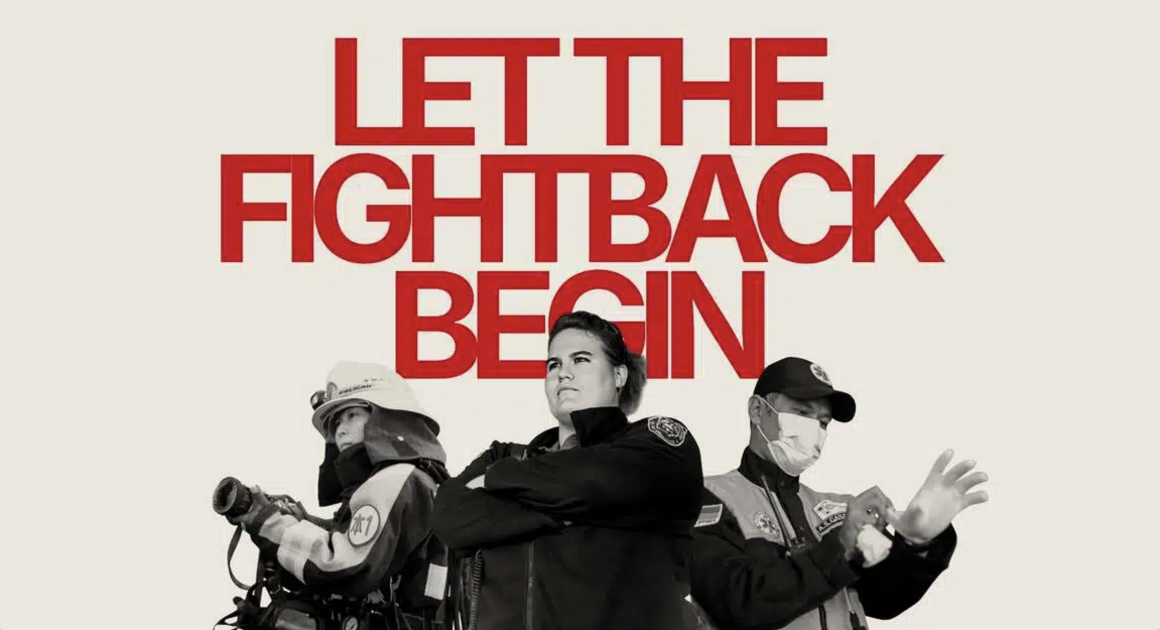
Daniel Bertossa, General Secretary of Public Services International (PSI), notes that a global campaign, “Public Service Fightback”, is underway to document these attacks and pool resources and tools for resistance: “In Brazil, too, public servants played a key role in thwarting Bolsonaro’s coup attempt. Neoliberalism has weakened states; mistreated workers are losing faith in democracy and looking for scapegoats to blame—migrants, women’s rights, and so on. But we must stand firm and convince people that public services remain the best weapon to defend the public interest and prevent fascism, by ensuring access for all to healthcare, education, transportation, and so on. We must prepare ourselves and be responsive.”
“We can no longer be content with isolated observations”
Speakers also expressed concern about their members’ growing susceptibility to certain far-right narratives. Hence the need to establish monitoring mechanisms and provide education by strengthening union training on the issue. “The issue doesn’t arise this way for the CGT,” explains Barbara Filhol, general secretary of the Health and Social Action Federation. We do not compromise with the far right, even less so when we are public servants whose mission is to ensure solidarity and equality. We believe our members share these values, but we know that the far right sometimes advances under a disguise, and that we must also engage in internal debate to demonstrate that, everywhere, it votes and acts against the working world.”
This sharing of personal stories and experiences did not fail to convince the 150 CGT activists present. An expanded network could help anticipate and counter certain attacks, whether through the law when it is protective, through individual or collective resistance—passive or active—or through political or union means. The CGT is not starting from scratch. It includes organizations covering all service professions and public sector roles. We must also count on inter-union engagement—representatives from the CFDT, the FSU, and the UNSA attended the conference with great interest. “We can no longer be content with isolated observations,” insists Françoise Geng, “we must defend our values, our missions, and the meaning of our work together.”
Disobeying in the Name of Professional Ethics
This is already the case when prefectural officials, customs officers, and police officers refuse to comply with orders that exceed their authority and/or violate their ethics. The same is true in the National Education system, where staff resist pressure regarding the content of their teaching without always feeling supported by their institution. Will they one day have to go so far as to invoke the right to refuse, professional conscience, or personal ethics to avoid sanctions?
Education and the Far Right: Resistance on All Fronts
“This is already the case in the healthcare sector,” says Laurent Laporte, general secretary of the Ufmict-CGT (2), where the very nature of hospitals is being called into question. Budget cuts are forcing some institutions to triage patients, and this may increasingly be based less on the urgency of care. Today, professional ethics allow us to save a patient’s life under any circumstances, even if a family member objects—such as a Jehovah’s Witness parent of a child, or a husband who demands that his wife be treated exclusively by a woman. Tomorrow, will we be forced to triage patients based on their appearance, their papers, or their money? That would be just as much a violation of our ethics.”
“Resisting deadly management practices”
Concepts such as “merit-based pay” are already laying the ideological groundwork and infiltrating the debates: “Should we encourage zeal, even at the risk of burnout and dangerous behavior, or even reward obedience? A good manager, a supervisor who does her job well, isn’t she supposed to engage in dialogue rather than impose sanctions if a problem arises in her team, especially given the dysfunction caused by a lack of resources? We must resist deadly management practices that impact the quality of care and the meaning of our work.”
“Everyone must face their own conscience,” concludes Françoise Geng, “and we must all stand together to defend our status, which still grants us a certain freedom of action. We must also remain vigilant against the infiltration of the far right and its ideas, pooling resources of all kinds, including, perhaps, by working in collaboration with NGOs and associations. A real battle plan is needed.” The workplace is undeniably a fertile ground for resistance.